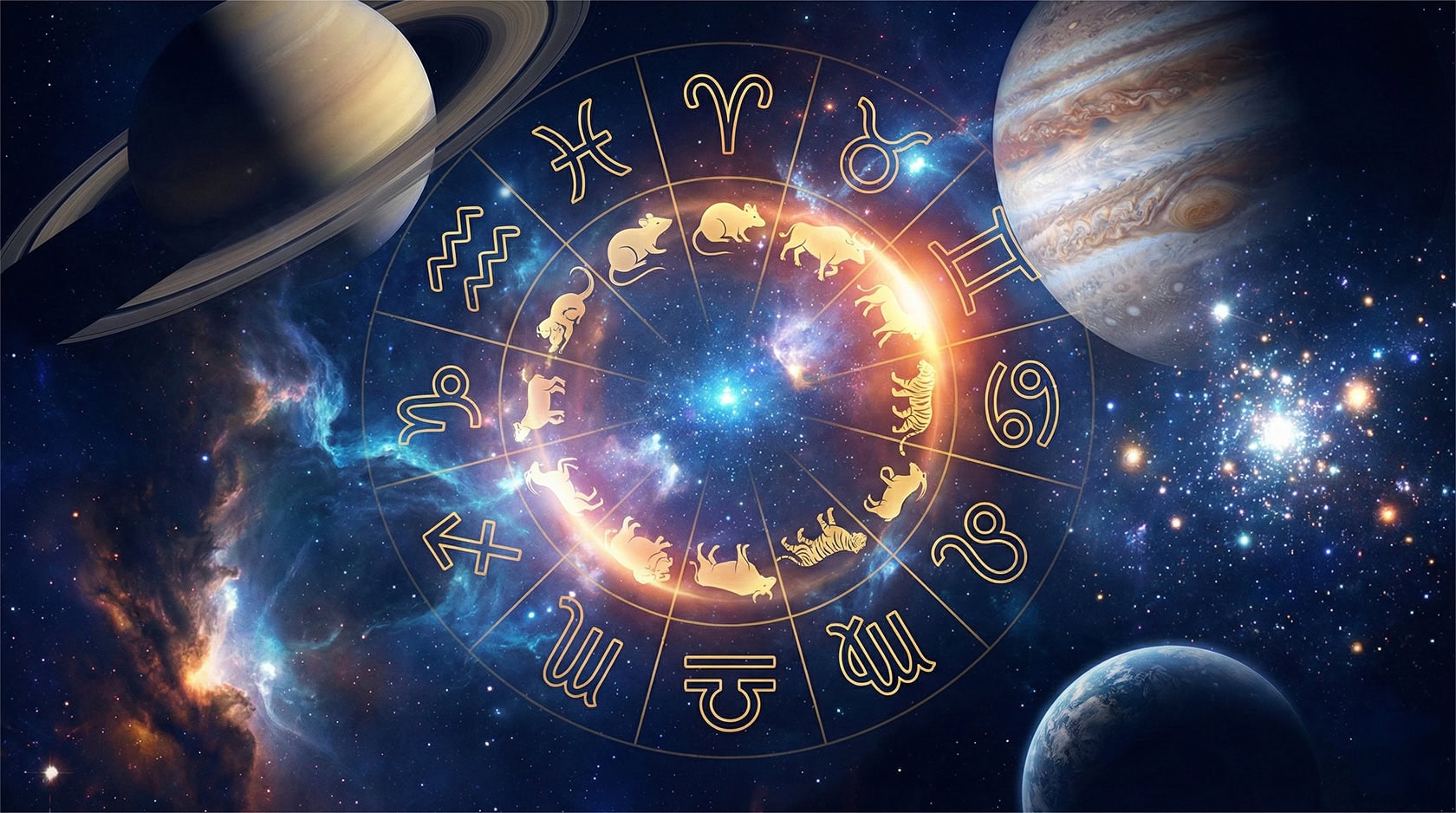




Zodiac Signs and Chinese Zodiac: Unveiling the Cosmic Laws Behind These Ancient Systems
The twelve zodiac signs and the Chinese zodiac have been revered for millennia, not just as symbols of cultural identity, but as reflections of deeper universal truths. While most people think of them in mystical or mythological terms, these systems are actually rooted in astrophysical phenomena—cosmic patterns that govern the movements of the planets and celestial bodies. In this article, we will dive into the scientific principles behind these systems, demonstrating that they are not mere folklore but representations of cosmic laws that impact our lives in ways we are just beginning to fully understand.
The Zodiac Signs: A Cosmic Blueprint for Understanding Earth's Relationship to the Stars
The True Meaning of Zodiac Signs
At first glance, zodiac signs may seem like symbols of ancient mythology, but in reality, they are derived from astronomical phenomena. The twelve signs of the zodiac correspond to the ecliptic plane—the path that the Sun takes across the sky as observed from Earth. Over the course of the year, the Earth’s orbit around the Sun causes different constellations to appear at different times, and these are the “signs” of the zodiac.
From a scientific perspective, zodiac signs are not physically separate clusters of stars; rather, they are patterns we see from Earth based on the Sun’s apparent motion across the sky. This movement is tightly tied to the Earth’s orbit, and how the Earth’s position relative to the Sun changes over time defines which zodiac sign the Sun occupies at any given moment.
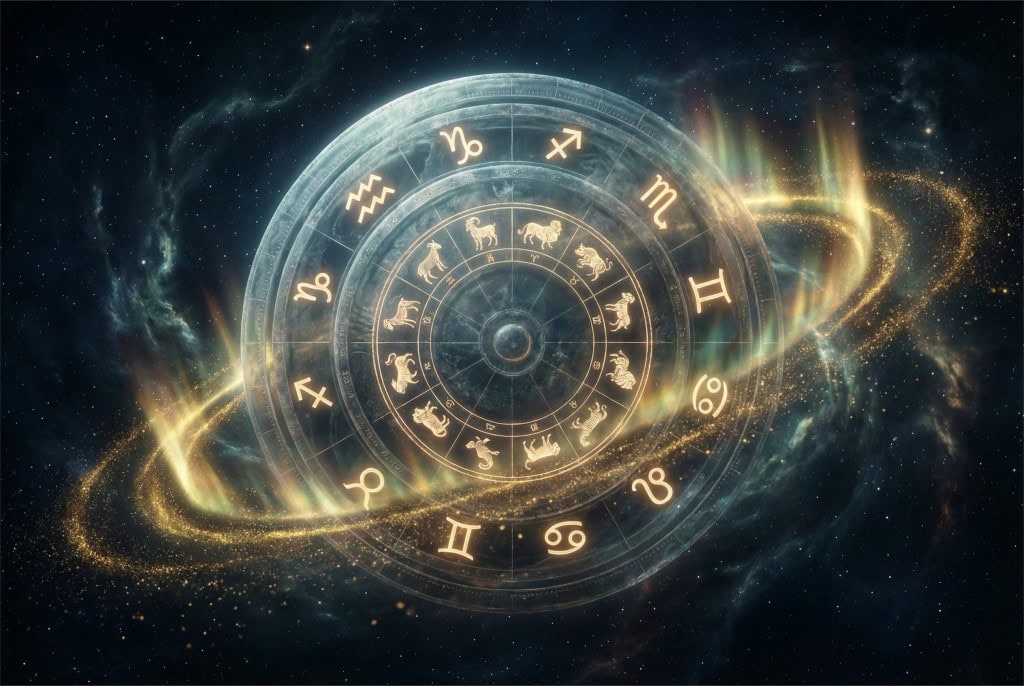

Jupiter, Earth, and the Sun: The Astronomical Mechanics Behind Zodiac Changes
The zodiac’s connection to astrophysics comes from the fact that the Sun’s apparent path across the sky, and hence the zodiac signs, are determined by the Earth’s orbital dynamics. As Earth revolves around the Sun, the Sun appears to pass through different parts of the sky, each corresponding to one of the zodiac constellations. This motion is part of a larger系统 of gravitational interactions, which includes the influence of Jupiter—the largest planet in our solar system. Jupiter’s massive gravitational pull impacts the movement of the Earth and other planets, subtly affecting the orbital stability of our solar system, which in turn influences the apparent positions of the stars and constellations.
In modern astronomy, we know that while the zodiac signs are convenient markers of time, they are not fixed in the sky. Due to the phenomenon known as precession, the position of the stars shifts gradually over thousands of years, meaning the signs that we recognize today may not be in the same place as they were thousands of years ago. Nevertheless, the zodiac’s fundamental relationship with Earth’s orbital mechanics remains constant.
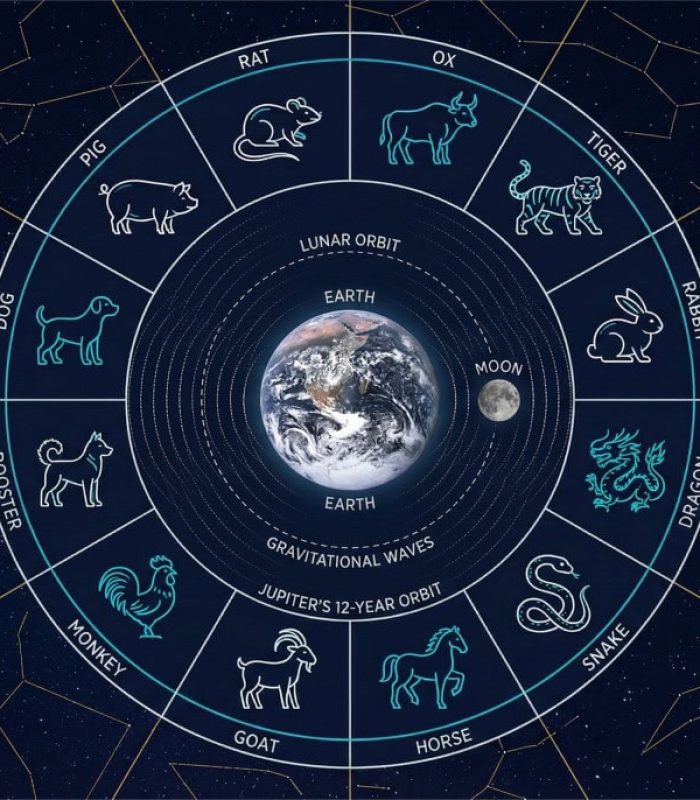
The Chinese Zodiac: A System Rooted in Lunar and Gravitational Cycles
The Science Behind the Chinese Zodiac
Unlike the Western zodiac, which is based on the Sun’s path, the Chinese zodiac is based on the lunar cycle. The twelve-year cycle of the Chinese zodiac corresponds to the orbital period of Jupiter, which takes approximately twelve years to complete one orbit around the Sun. Each year in the Chinese zodiac represents a specific animal symbol, with each symbol being tied to specific astrological traits and associated with the cycles of time.
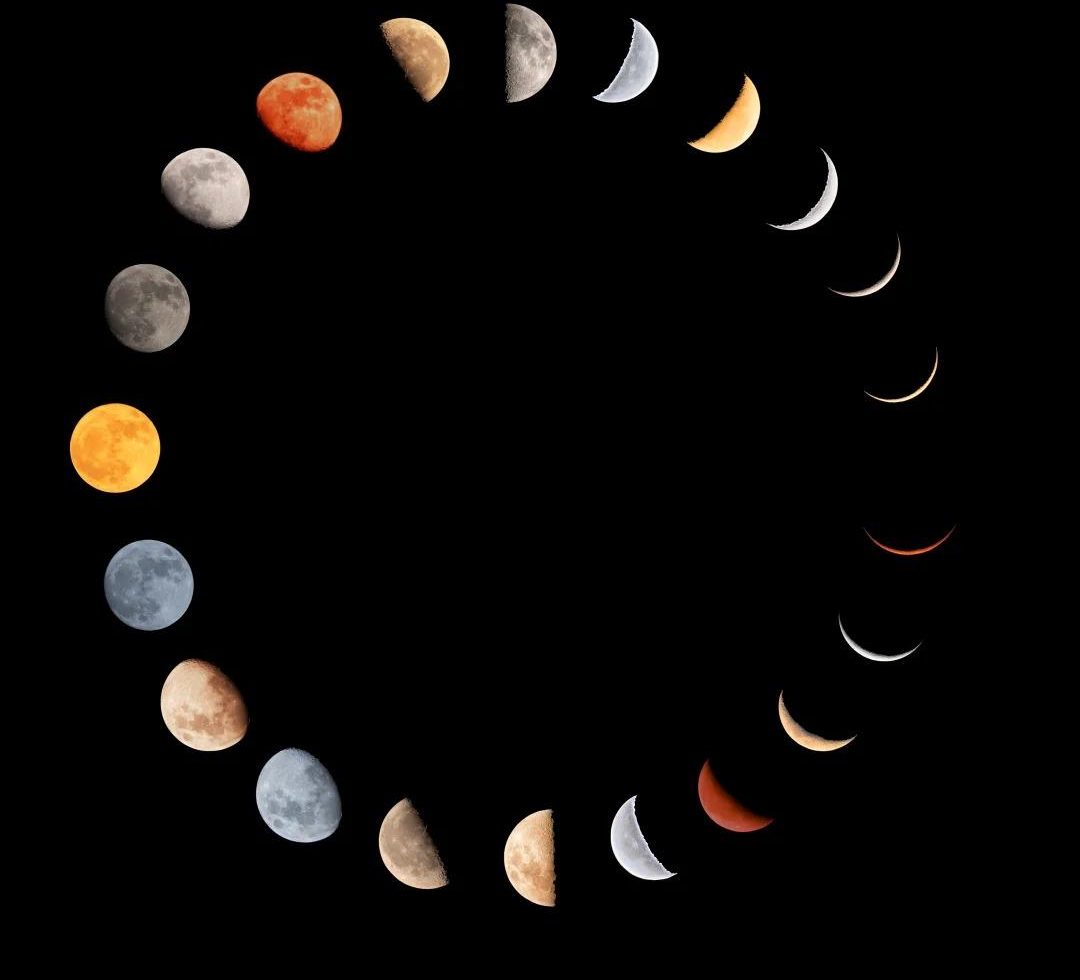
At the core of the Chinese zodiac is the influence of lunar and gravitational cycles. The Moon’s gravitational pull on Earth, as well as its relative position to the Sun and Earth, creates cyclical patterns that are reflected in the twelve-year system of the Chinese zodiac. These patterns are inextricably linked to the gravitational relationship between Earth, the Moon, and other celestial bodies.
Lunar Cycles and Earth's Gravitational Dance
The Chinese zodiac’s foundation lies in the Moon’s cycle around the Earth. As the Moon orbits Earth, it has a gravitational effect on both Earth’s tides and its rotation, creating a natural rhythm that influences the annual cycle. This rhythm is echoed in the twelve-year cycle of the Chinese zodiac, with each year symbolizing a distinct set of cosmic forces that interact with the gravitational system of Earth and the Moon.
This system offers a fascinating cosmic blueprint that reflects the gravitational forces at play in the universe, subtly influencing both the environment and human affairs.
How Zodiac Signs and the Chinese Zodiac Are Linked by Universal Patterns
Though they come from different cultural traditions, both the Western zodiac and the Chinese zodiac share a common foundation in cosmic cycles. Both systems are rooted in the cyclical nature of celestial movements, whether that’s the apparent movement of the Sun across the zodiac signs or the influence of the Moon and Jupiter on the Chinese zodiac. Both systems offer insights into the natural cycles of time and space, helping us understand how the universe’s rhythms affect life on Earth.
The Sun and the Zodiac: The position of the Sun in relation to the Earth’s orbit defines the twelve Western zodiac signs. This is an observable pattern tied to the Earth’s yearly revolution around the Sun.
Both the zodiac signs and the Chinese zodiac reflect universal laws of nature. They are not just arbitrary cultural symbols, but indicators of the gravitational and astronomical forces that govern our solar system and, by extension, our lives.

Why Understanding the Scientific Foundations of the Zodiac Matters
The Value of Zodiac and Chinese Zodiac as Scientific Systems
Understanding the scientific foundations of the zodiac and the Chinese zodiac is crucial because it shifts our perception of these systems. Rather than viewing them as mystical or mythological constructs, we can appreciate them as reflections of cosmic order and natural law. These systems provide a window into how celestial bodies—like the Earth, Moon, and Sun—interact, influencing the patterns of time and space that shape our world.
By studying the astronomical phenomena behind the zodiac signs and the Chinese zodiac, we gain a deeper understanding of the forces at play in the universe. This knowledge doesn’t just enhance our appreciation of astrology and cultural traditions—it offers a scientific context for how these systems can provide meaningful insight into human behavior and life patterns.
Bringing Science and Astrology Together
At YourWebsiteYourWebsite, we combine the scientific principles of astrology with traditional insights to offer a unique approach to life guidance. Our analyses are grounded in astrophysical patterns that govern both the zodiac signs and the Chinese zodiac, providing you with a rational, grounded perspective that connects cosmic rhythms to your everyday life.
Conclusion: Zodiac Signs and the Chinese Zodiac as Cosmic Markers
In conclusion, both the Western zodiac and the Chinese zodiac are deeply rooted in astronomical phenomena and gravitational cycles. They are not simply mythological constructs, but represent real, observable patterns in the movements of celestial bodies that govern life on Earth. Understanding these cosmic patterns allows us to make more informed decisions and navigate life in tune with the universe’s natural rhythms.
If you’re interested in exploring how the zodiac signs and Chinese zodiac affect your life, or if you’d like to learn more about how the cosmic laws influence your path, we invite you to explore our services. Let’s discover the science behind the cosmos and how it can help you align with your true potential.